








CNC nesting and nested-based output Arrangement is not toolpath.
Nesting is where a cut list becomes a physical arrangement on a sheet. It is a different discipline from optimisation, because it has to respect not only yield but the realities of holding and cutting parts safely.
What is produced
- Nested sheet layouts
- By material and thickness.
- Part positioning
- Within each sheet, respecting grain and directional constraints.
- Part spacing
- To your supplied parameters, not to a default.
- Trim and edge allowances
- Applied at the sheet boundary.
- Onion-skin or tab strategy
- Where you specify one.
- Part labelling
- Carried through to each nested part, so the label on the panel matches the label on the drawing.
- Sheet-by-sheet output
- In the format your downstream system consumes.

Why parameters govern everything
Nesting is the stage where an assumption stops being inefficient and becomes dangerous.
- Kerf. Assume the wrong tool diameter and every part in the sheet is wrong by a predictable, avoidable amount.
- Holding. Parts too close together, or too small, can move during cutting. Vacuum and clamping behaviour is specific to your table, not to a category of table.
- Sequence. Cutting order decides whether a part is still held when the tool reaches it.
- Trim allowance. Sheets are not exactly nominal size and edges are not reliably square.
- Grain. Rotating a part to improve yield is free on a plain material and unacceptable on a directional one.
Nesting follows the parameters you supply. Where one is missing it is requested, not assumed. This is a hard requirement rather than a preference, and a supplier who does not ask for these is not going to produce something you can run.
What this is not
Nested output is geometry and arrangement. It is not toolpath, not tooling selection, and not machine code.
Converting a layout into instructions for a specific machine, with its controller, its tooling library and its post-processor, is machine integration work. It stays with your programmer or your integrator, and that is a permanent position rather than a capability we are building toward.
Ask any supplier offering to write code for a machine they have never seen how they intend to test it.
Where nesting sits against optimisation
Optimisation decides how many sheets the parts should come from. Nesting decides where each part physically sits on those sheets, and whether that arrangement can actually be cut.
A layout can be optimal on yield and unusable on the floor. The two run together, and they are quoted together.
Who this suits
Shops running nested-based manufacturing where programming capacity, not the machine, is the constraint. Operations running rollout programmes where the same nested output is required repeatedly and has to be identical each time.
Selected work
Nested layouts, to supplied parameters
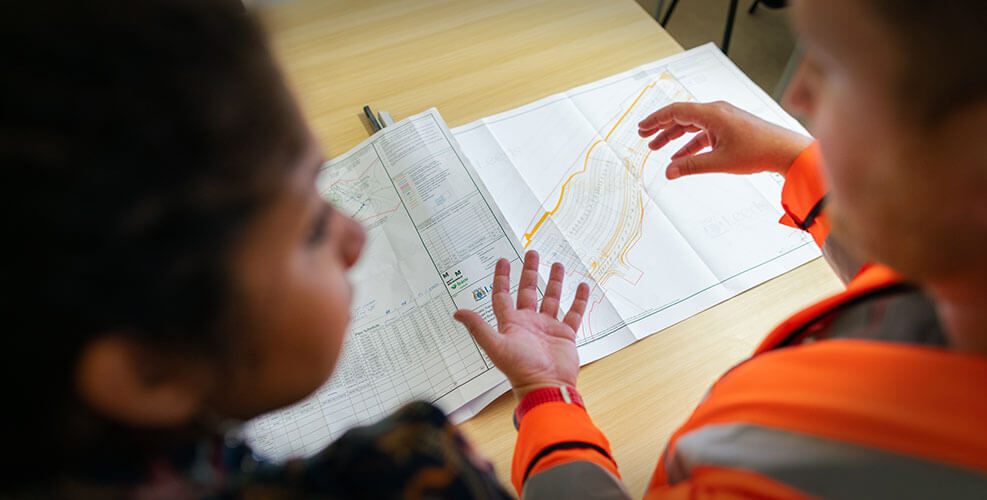


Nesting follows the parameters supplied. Where a parameter is missing, it is requested, not assumed.
FAQ
Frequently Asked Questions
What file formats do you deliver?
The formats your environment consumes, agreed at scoping. Commonly nested geometry as DXF alongside the associated part data.
Can you nest for multiple sheet sizes?
Yes, where you supply the sizes you actually hold and any preference for which to consume first. Nesting against sizes you do not stock produces a layout nobody can cut.
Do you verify the output on a machine?
No. Verification happens on your machine with a test cut, because that is the only place it can honestly be done. First runs should always be proven before committing material.
What if we do not know our own parameters?
That is common, particularly where the person who set the machine up has left. Establishing them properly is separate work and it should happen before anyone nests anything.
Book a production readiness audit
Establish the parameters first. See what comes back before committing a sheet.
- Nested output produced to supplied parameters, never assumed
- Geometry and arrangement only – no toolpath or machine code claimed
- Verification stays on your machine with a real test cut
- One named contact, not a general queue
Book a Production Readiness Audit
See Cut Lists & CNC-Ready Production Data · See a Sample Set
Project enquiry
Scope and questions come back, not a template.