







Specification analysis and compliance review The document nobody reads decides what gets built.
The specification decides what you are contracted to deliver, and it is the document most likely to be skimmed. It is where the grade sits, where the governing standard is named, where testing and certification obligations appear, and where the clause that adds materially to your cost is hiding in a paragraph nobody read twice.
What the review covers
- The governing standard and grade
- Which standard applies, which grade is called for, and what that grade actually requires in construction, materials and tolerance.
- Conflicts between specification, drawings and schedules
- These are common and they always resolve in someone’s favour. Better to know whose before you price.
- Product and hardware requirements
- Named products, approved-equal provisions, and whether what is specified is available and suitable for the drawn condition.
- Material requirements
- Species, cut, core, matching and sequencing obligations, and where they drive cost that a drawing review alone would not reveal.
- Finish requirements
- Including system, sheen, testing and sample obligations.
- Certification and quality programme obligations
- Where the specification requires them.
- Testing, mock-up and sample requirements
- Which carry real cost and real lead time and are frequently unpriced.
- Compliance obligations
- Relating to fire rating, seismic anchorage or other performance requirements, where they apply.

What the grade actually obliges
Grade is the single clause most often read as a label rather than as a cost driver. It is not.
A grade sets the acceptable substrate. It sets edge banding thickness and joint quality. It sets the permitted gap between a door and its frame, between adjacent doors, and between a drawer front and its opening. It sets what counts as an exposed, semi-exposed or concealed surface, and those three categories carry different material and finish obligations on the same item.
Specifying a substrate that the grade does not permit for an exposed application is a rejection, not a comment. So is a hardware callout that names a function without a manufacturer, model, load rating and finish where the grade requires that level of specificity. None of this appears on the architect’s drawings. All of it is priced.
When it is worth doing
- Before bid. The highest-value moment, because everything found can still change the number.
- Before detailing. Reading the specification in full before drawing prevents an entire category of rework and reduces the RFI count materially.
- Before a disputed submittal. Where a package has been rejected on compliance grounds, an independent reading establishes whether the rejection is correct, which is a different question from whether it is inconvenient.
What you receive
A findings report listing each item, where it sits in the documents, what it implies commercially or technically, and a recommendation.
Items requiring a design-team answer are drafted as RFIs, ready for you to issue. Items affecting buildability go to constructability review. Items affecting quantities go back to the estimator with the clause reference attached.
The limit, stated plainly
Findings and recommendations are reported. BluEnt does not issue compliance certification and is not the certifying authority under any quality programme. Where a condition raises a structural question, it is flagged for a qualified engineer rather than answered.
Selected work
Specifications, read before pricing
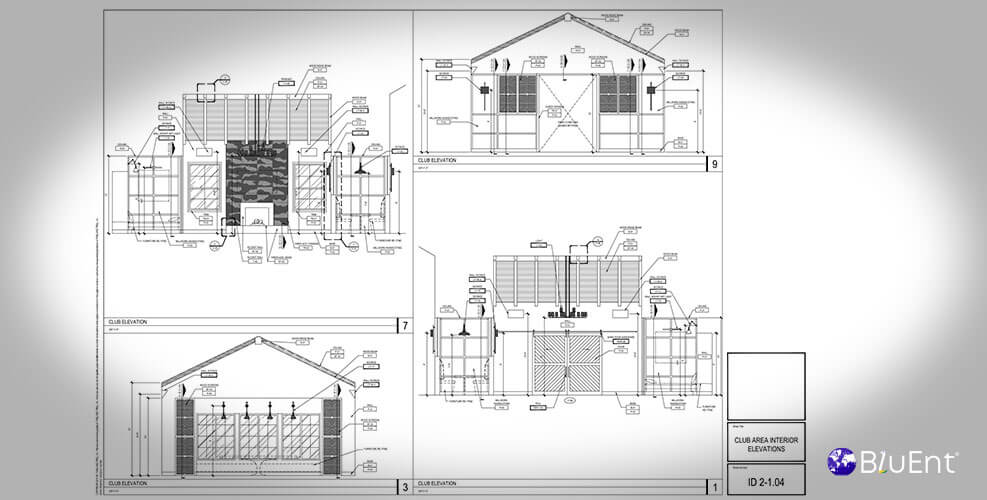


The clause that adds materially to cost is hiding in a paragraph nobody read.
FAQ
Frequently Asked Questions
Can you review a specification without the drawings?
Partially. Grade, material and finish obligations can be read alone. Conflict detection needs both documents, because a conflict is by definition a disagreement between them.
Do you confirm compliance formally?
No. Findings and recommendations are reported. BluEnt is not the certifying authority under any quality programme and does not issue compliance certification.
Which standards do you work to?
The standard the project names. In practice that is most often AWI or AWS in the United States, AWMAC and GIS in Canada, and BS or BWF conventions in the United Kingdom.
We read the specification ourselves. What does this add?
Usually the clauses that are read as descriptive but are actually obligations: grade-driven substrate rules, surface exposure categories, mock-up and testing requirements, and quality programme conditions. An estimator reading under bid pressure is reading for scope, not for obligation.
Send the specification and drawings
Findings come back before you price it.
- Findings reported, not certified – BluEnt is not a certifying authority
- Conflicts between specification, drawings and schedules surfaced early
- Items needing a design-team answer drafted as RFIs
- One named contact, not a general queue